

Understanding the Difference Between Switchgear and Switchboards
In modern electrical power distribution, reliability and safety depend on the precise coordination of multiple interconnected components. Among these, low-voltage (LV) switchgear and switchboards form the foundation of every industrial and commercial power network.
Although often discussed together, switchgear and switchboards serve distinct purposes. The key difference lies in their internal hardware and functional roles within a facility’s electrical infrastructure.
LV switchgear is a centralized system engineered for controlling, protecting, and isolating electrical power, ensuring system stability and operator safety. It integrates circuit breakers, disconnect switches, and protective relays to manage power flow effectively.
Switchboards, by contrast, act as distribution hubs, free-standing panels that route electricity to multiple downstream loads or subcircuits across a facility. While both systems contribute to efficient power distribution, their applications, design, and protection mechanisms make them complementary rather than interchangeable.
Introduction to Key Differences Between LV Switchgear vs. Switchboards
Comparing low-voltage (LV) switchgear and LV switchboards is essential for understanding their technical differences and how each contributes to reliable power distribution.
LV switchgear serves as a centralized control system that manages power flow and provides critical functions such as circuit protection, load control, and electrical isolation. According to Article 100 of the National Electrical Code (NEC), switchgear is defined as:
“An assembly that has sheet metal covering the whole top and sides (except ventilation and inspection windows), and that is equipped with buses and connections for primary power circuit switching, interrupting devices, or both. There may be auxiliary and control devices in the assembly. Doors, detachable coverings, or both can be used to enable access to the enclosure’s interior.”
In contrast, switchboards act as free-standing power distribution panels, designed to route electrical energy efficiently across multiple loads within a facility. Their primary function is to manage power distribution safely and effectively across subcircuits. As defined in NEC Article 100:
“A large single panel, frame, or assemblage of panels with switches, overcurrent and other protection devices, buses, and typically instrumentation located on the face, back, or both. These assemblies are not meant to be put in cabinets and are often accessible from both the front and the back.”
Switchboards are typically constructed in a structural frame design, allowing components to be securely mounted within the framework for easy access and maintenance.
This technical comparison between LV switchgear and LV switchboards provides a foundation for understanding their distinct roles within electrical systems, highlighting where they overlap in function and where they diverge in purpose and design.
A Comparative Analysis of Functionality and Components
LV switchgear is primarily focused on circuit protection, compartmentalization, and centralized control. It integrates key protective components such as circuit breakers, disconnect switches, and relays that safeguard electrical circuits against faults and ensure overall system reliability [1]. The emphasis lies in maintaining operational safety and providing secure control over electrical power flow.
In contrast, LV switchboards are designed to distribute electrical power efficiently across various loads within a facility. They serve as organized distribution panels that house main components such as busbars, switches, fuses, and protective devices, ensuring consistent and balanced power delivery to multiple circuits or systems.
A comparative analysis clearly highlights the distinct yet complementary roles of these two systems in ensuring the dependability and safety of electrical infrastructure.
Design and Customization
When comparing LV switchgear and LV switchboards, design flexibility, cost, and maintainability emerge as key differentiating factors.
In general, switchboards are more cost-effective than switchgear due to their simpler structural design. However, this simplicity can also make them less maintainable, particularly in demanding industrial environments. Modern switchboards are often designed without the need for rear access, diverging slightly from the traditional definition outlined in the National Electrical Code (NEC).
Both LV switchgear and LV switchboards can be customized, though the nature of customization differs between the two.
LV switchgear focuses on precision control and protection, offering configuration options for relay coordination, circuit isolation, and safety interlocks. Its design prioritizes robustness, accessibility, and ease of maintenance, ensuring rapid response in the event of an electrical fault.
LV switchboards, on the other hand, provide greater layout flexibility and component-level customization to suit specific project requirements. They can be assembled in modular panel configurations, often incorporating molded case circuit breakers (MCCBs) that are group-mounted to maximize both space efficiency and operational functionality.
This distinction highlights how switchgear prioritizes protection and control, while switchboards emphasize adaptability and cost efficiency in modern electrical distribution systems.
Modularity and Scalability: Assessing Flexibility and Expansion
Modularity in LV Switchgear and Switchboards
Both LV switchgear and LV switchboards are increasingly adopting modular design principles to enhance flexibility, maintainability, and scalability in modern electrical systems.
In LV switchgear, the modular design isolates individual components such as protection relays, control panels, and circuit breakers into distinct, easily accessible sections. This structure simplifies installation, maintenance, and component replacement, allowing damaged or outdated modules to be replaced without interrupting the system’s overall operation.
This modular approach improves troubleshooting efficiency and system adaptability, making LV switchgear particularly valuable in complex and mission-critical power distribution environments [3].
Similarly, LV switchboards incorporate modular configurations to meet diverse project requirements. The modular framework allows for the integration of additional circuit breakers, metering units, or monitoring components as needed.
This scalability enables electrical engineers to expand or reconfigure switchboards easily to accommodate new equipment or shifting load conditions. For facilities planning future growth or operational adjustments, modular LV switchboards provide a reliable and future-ready power distribution solution.
Scalability for Future Expansions
Scalability is an essential factor in both LV switchgear and LV switchboards, allowing electrical systems to adapt to future growth and changing operational requirements.
LV switchgear is designed to support expansion through the addition of new modules or the replacement of outdated components, ensuring that the system can evolve alongside increasing power demands or technological upgrades.
In a similar way, LV switchboards can be expanded by adding new sections or modifying the busbar configuration to accommodate higher electrical loads. This flexibility allows facilities to enhance capacity without a complete redesign, making both LV switchgear and LV switchboards sustainable, long-term solutions for modern power distribution systems.
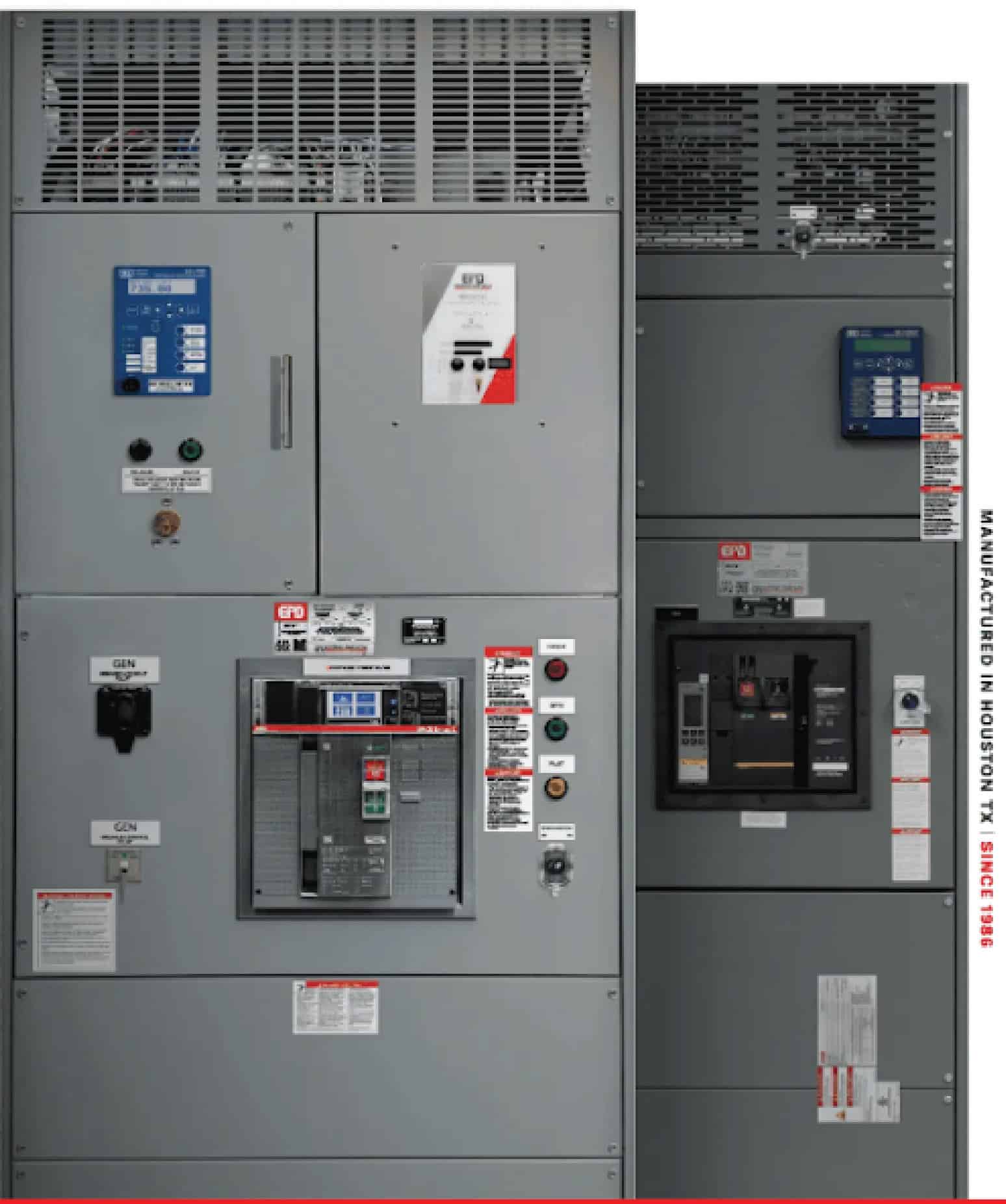
Industry guidelines and regulations for electrical systems
Although design engineers often rely on standard specifications and may overlook their deeper significance, the UL, ANSI, and NEMA standards that define the construction and testing of switchgear and switchboards form the essential foundation for understanding the distinctions between these two types of equipment.
These standards ensure that both systems meet strict requirements for safety, reliability, and performance, highlighting the importance of recognizing how design and compliance influence overall system operation and long-term dependability.
The construction of switchboards is assessed using the following criteria and guidelines:
- The switchboard standard is UL 891.
- Deadfront Distribution Switchboards, NEMA PB 2.
The building of switchgear is assessed in accordance with the following guidelines and standards:
- UL 1558 defines the safety and performance standards for metal-enclosed low-voltage power circuit breaker switchgear, ensuring that these assemblies meet rigorous requirements for construction, operation, and testing.
- Standard for Metal-Enclosed Low-Voltage Power Circuit Breaker Switchgear (ANSI/IEEE C37.20.1).
- Conformance test procedures for metal-enclosed low-voltage AC power circuit breaker switchgear assemblies are specified in ANSI C37.51.
Both switchboards and switchgear must comply with the relevant UL standard—UL 891 for switchboards and UL 1558 for switchgear—to ensure safety and performance.
Bus ratings are a critical factor in meeting these standards, as they determine the equipment’s ability to safely carry and withstand electrical loads. In terms of testing, switchgear is subjected to short-circuit performance tests at 15% power for 30 cycles, while switchboards are tested at 20% power for only three cycles.
These differences in testing protocols highlight the varying levels of robustness and compliance required for each type of equipment.
Unveiling Innovations in LV Switchgear and Switchboards
Recent technological developments have transformed the design and functionality of low-voltage (LV) switchgear, elevating its performance, safety, and monitoring capabilities.
Modern intelligent electronic devices (IEDs) are now incorporated into LV switchgear systems to provide advanced metering, communication, and protection features. Microprocessor-based relays deliver precise fault detection and rapid response, improving operational reliability and reducing downtime [4]. In addition, innovations in insulation materials and component design have contributed to greater energy efficiency and a lower environmental footprint.
LV switchboards have also benefited from these advancements. Their integration with smart grid technologies enables real-time communication, monitoring, and adaptation to changing electrical conditions. Intelligent control systems analyze power distribution data instantly, improving overall system efficiency. Meanwhile, touchscreen interfaces and advanced control panels enhance usability, allowing operators to manage systems more intuitively and respond quickly to potential issues.
Enhancing Performance and Safety
Low-voltage (LV) switchgear and switchboards now incorporate advanced technologies designed to elevate both safety and performance standards. Intelligent protection relays, condition monitoring systems, and diagnostic tools provide operators with detailed insights into the condition and performance of the electrical infrastructure, enabling proactive management and maintenance.
LV switchgear, in particular, is engineered to safeguard against electrical hazards by allowing operators to disconnect power flow and assume manual control during emergencies, minimizing risks to personnel and equipment.
This proactive approach to maintenance not only reduces downtime but also enhances long-term system reliability.
Moreover, recent innovations align with growing global priorities for sustainability and energy efficiency, ensuring that LV switchgear and switchboards continue to evolve in response to the demands of modern electrical systems.
Enhancing Performance and Safety
Assessing Energy Efficiency
Energy efficiency has become a defining measure of performance for low-voltage (LV) switchgear and switchboards in modern electrical systems.
Today’s LV switchgear incorporates advanced design elements that significantly reduce energy losses, including high-efficiency transformers, low-loss circuit breakers, and optimized current paths that limit resistive heating.
In addition, the use of enhanced insulation materials and refined engineering practices helps minimize power dissipation while improving overall system performance.
These innovations collectively contribute to more efficient electrical distribution, supporting both cost reduction and sustainability goals across industrial and commercial applications.
Contributions to Sustainable Practices
Switchboards and LV switchgear are essential components in the advancement of green and sustainable energy techniques.
The flexibility and interoperability of low-voltage (LV) switchgear make it well suited for integrating renewable energy sources such as solar and wind power, as illustrated in Figure 2.
These systems are designed to manage variable inputs efficiently, ensuring seamless synchronization between renewable generation and the main power network [5].
Similarly, LV switchboards serve as centralized hubs for managing and distributing power from multiple sources, supporting a more resilient and sustainable electrical infrastructure. Their ability to integrate energy storage systems, including batteries or hybrid modules, further enhances their versatility by enabling optimized energy balancing and improved utilization of renewable resources.
Championing Sustainability
As industries around the world continue to prioritize sustainability, low-voltage (LV) switchgear and switchboards have become vital components in advancing greener energy practices.
Their ability to enhance energy efficiency, support renewable energy integration, and incorporate sustainable design principles positions them as essential elements in the development of eco-conscious electrical infrastructure, as illustrated in Figure 3.
The ongoing focus on improving energy performance and sustainability highlights the importance of LV switchgear and switchboards as foundational technologies in creating reliable, efficient, and environmentally responsible power distribution systems.

Cost-Benefit Analysis and Financial Implications of LV Switchgear and Switchboards
Conducting a Comprehensive Analysis
Performing a detailed cost-benefit analysis is essential when evaluating the financial aspects of low-voltage (LV) switchgear and switchboards. This assessment should consider not only the initial investment but also operational costs, maintenance requirements, and potential savings throughout the system’s entire lifecycle.
While switchgear often involves higher upfront expenses due to its complex design and advanced functionalities, switchboards may present a more straightforward and cost-efficient option for specific applications.
Long-Term Financial Implications
A clear understanding of the long-term financial impact of LV switchgear and switchboards depends on evaluating key factors such as energy efficiency, maintenance frequency, and the ability to adapt to future operational demands. Taking a holistic view of these elements allows organizations to make informed decisions that balance cost, reliability, and performance over time.
Future Trends and Developments: Navigating the Evolving Landscape
As technology continues to progress, the future of low-voltage (LV) switchgear and switchboards presents significant opportunities for innovation and improvement. Anticipating future trends involves recognizing how advancements in materials, digitalization, and automation will continue to enhance performance, reliability, and sustainability.
Developments in connectivity, predictive maintenance, and smart grid integration are expected to redefine how these systems operate, as shown in Figure 4.
In the coming years, LV switchgear and switchboards will play an essential role in managing complex power networks, integrating multiple energy sources, and maintaining a stable and reliable supply of electricity across transmission and distribution systems.
The integration of artificial intelligence, data analytics, and the Internet of Things will further advance these technologies by enabling intelligent power management, real-time monitoring, and more adaptive and efficient electrical infrastructure.
Conclusion
When comparing low-voltage (LV) switchgear and switchboards, it is important to understand that there is no universal solution. Each project has unique requirements and constraints that determine which option will deliver the best performance and long-term value.
Decision-makers should work closely with experienced electrical engineers to evaluate key factors such as system complexity, scalability, maintenance requirements, and the evolving needs of the facility’s power infrastructure.
Ultimately, making an informed decision depends on a thorough understanding of the distinct characteristics and capabilities of both LV switchgear and switchboards. By leveraging dependable, efficient power distribution solutions, organizations can achieve greater reliability, safety, and operational efficiency in their electrical systems.
References
- Luo, Ruibin, Ming Tang, and Deliang Liang. "On-site partial discharge test of medium voltage switchgear by time of arrival method." 2014 17th International Conference on Electrical Machines and Systems (ICEMS). IEEE, 2014.
- Sun, Ying, et al. "Efficient power outage perception and recovery processing solution in low voltage power grid." (2019).
- Southall, M., and A. Anbarasu. "Comparative Assessment Between LV & MV Electrical Power Systems & Equipment for Marine Applications." Conference Proceedings of INEC. 2022.
- Pálfi, Judith, Miklós Tompa, and Péter Holcsik. "Analysis of the efficiency of the recloser function of lv smart switchboards." Acta Polytechnica Hungarica 14.2 (2017): 131-150.
- Cho, Youngpyo, et al. "Application of LVDC Distribution Switchboard System with New and Renewable Energy Source on the Demonstration Site." (2019).